

2025/09/10
Wabi-Sabi Misunderstood: Gentle Answers to Quiet Questions
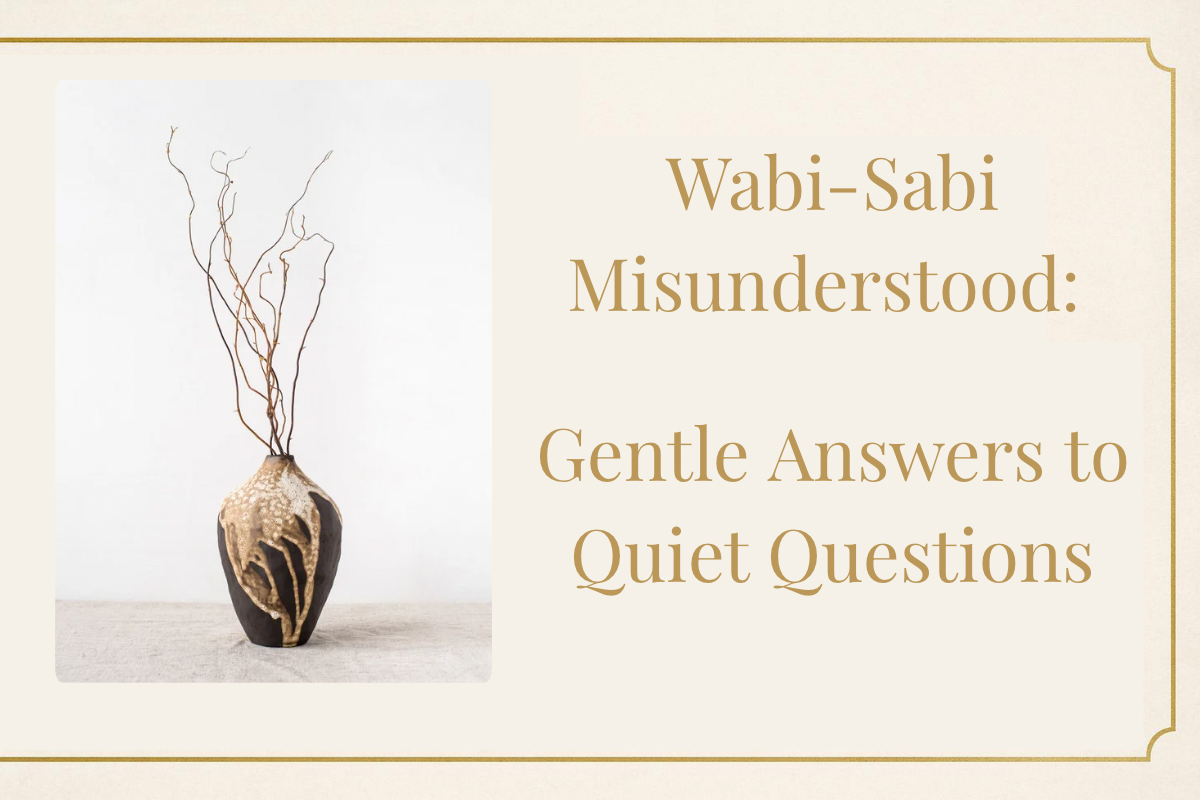
“Wabi-sabi is beautiful — but I don’t really understand it.”
I’ve heard this many times — from readers, travelers, and even friends in Japan.
And every time, I smile gently. Because wabi-sabi is not something you define…
It’s something you notice when you slow down enough to feel it.
❓ Why do people bring trash home in Japan?
“Why don’t Japanese people just throw their trash away? Why carry it home?”
It’s a fair question. In many countries, public bins are everywhere.
But in Japan, there’s a quiet principle: leave no trace.
Not because it’s a rule. But because it’s a way to respect space — and the people who come after.
Carrying your trash home may seem inconvenient.
But it’s a form of silent hospitality — an invisible act of care.
Just like in the tea ceremony, where every detail is prepared quietly for the guest’s peace,
this too is a way of saying: “I thought of you.”
True beauty often happens where no one is watching.
And in Japan, even how we handle trash can reflect that.
❓ What does wabi-sabi really mean?
Wabi-sabi isn’t one thing. It’s not a color or design style.It’s a way of seeing.
Wabi is quiet simplicity.
Sabi is the beauty of time and imperfection.
But the real meaning lives in moments — not words.
Like a raindrop on a leaf.
A silence that softens the heart.
A chipped cup that holds your favorite tea.
I saw a single drop of water resting on a leaf — not special, not perfect… but quietly beautiful.
That was my wabi-sabi moment.
You don’t need to understand it fully.
Just give it space. It will arrive.
💎Silent Luxury — A Closing Thought
This morning, I came across the phrase “silent luxury.”
And I thought — no country expresses this better than Japan.
Here, luxury doesn’t shout.
It lives in shadows, in quiet spaces, in things that don’t try to impress.
It lives in the changing seasons. In the feel of a handmade bowl.
Because it is quiet, it echoes further than anything loud ever could.
Wabi-sabi is not the absence of beauty — it is beauty that whispers.